

RENAULT
AI upskilling grounded in everyday work
How do you turn interest in AI into practical, responsible use with the potential to create value for both employees and the business?
In a hands-on AI upskilling programme at Renault Denmark, a group of participants worked on applying AI to tasks from their own working day.
The programme gave participants a framework for testing AI on specific work tasks, sharing experiences and following up on relevant applications. After the programme, 94% of respondents said they used AI, compared with 73% before the programme.
CHALLENGE
Interest and tools were not enough
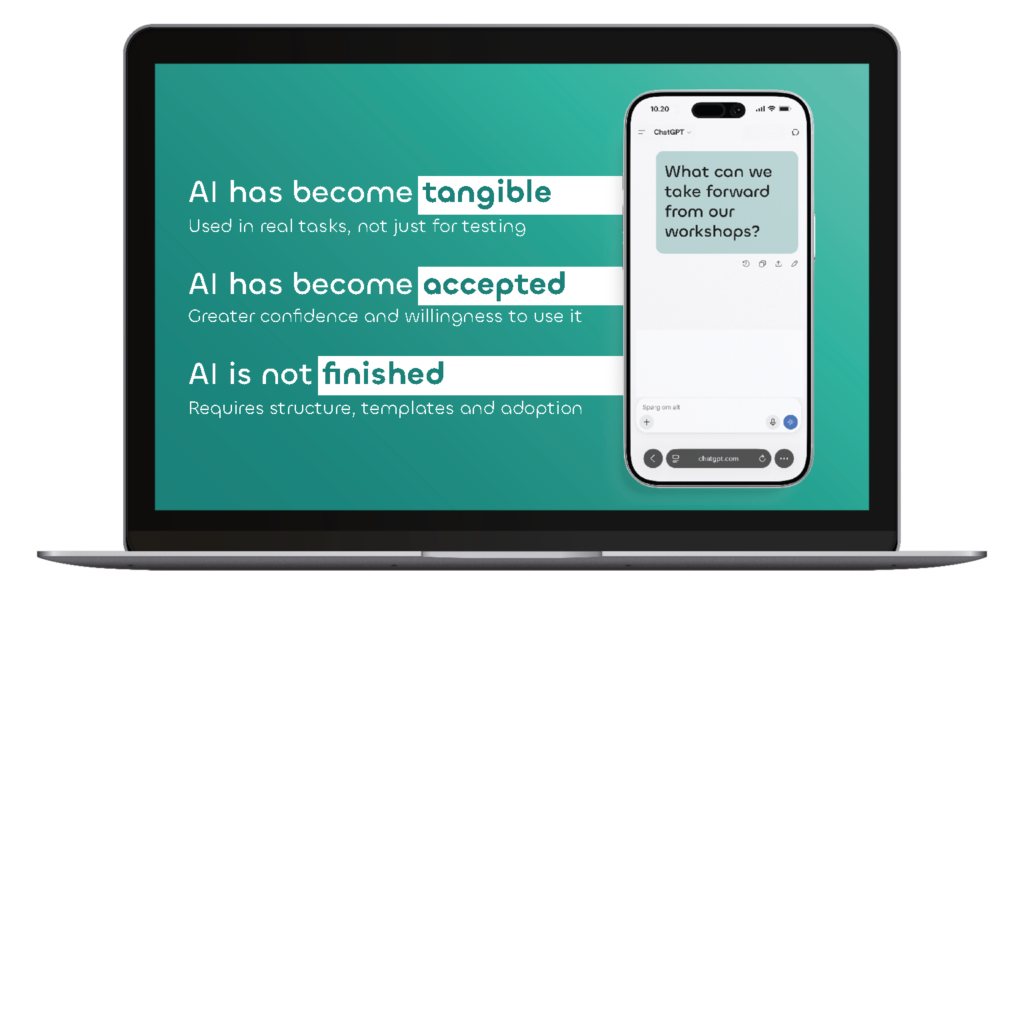
There was already an interest in AI, but inspiration and access to new tools do not automatically translate into more practical use at work.
The task at Renault Denmark was therefore to make AI relevant to participants. Rather than simply being introduced to general tools and prompts, they needed to work with the technology in relation to the needs and friction they already encountered in their working day.
The aim was not simply to increase the use of AI. The programme was also intended to help build a shared understanding of where AI had the potential to create business value and how the technology could be used responsibly in everyday work. Participants therefore needed to be able to identify relevant applications, while professional judgement and the final decision were to remain with the employee.
SOLUTION
An AI upskilling programme centred on participants’ own tasks
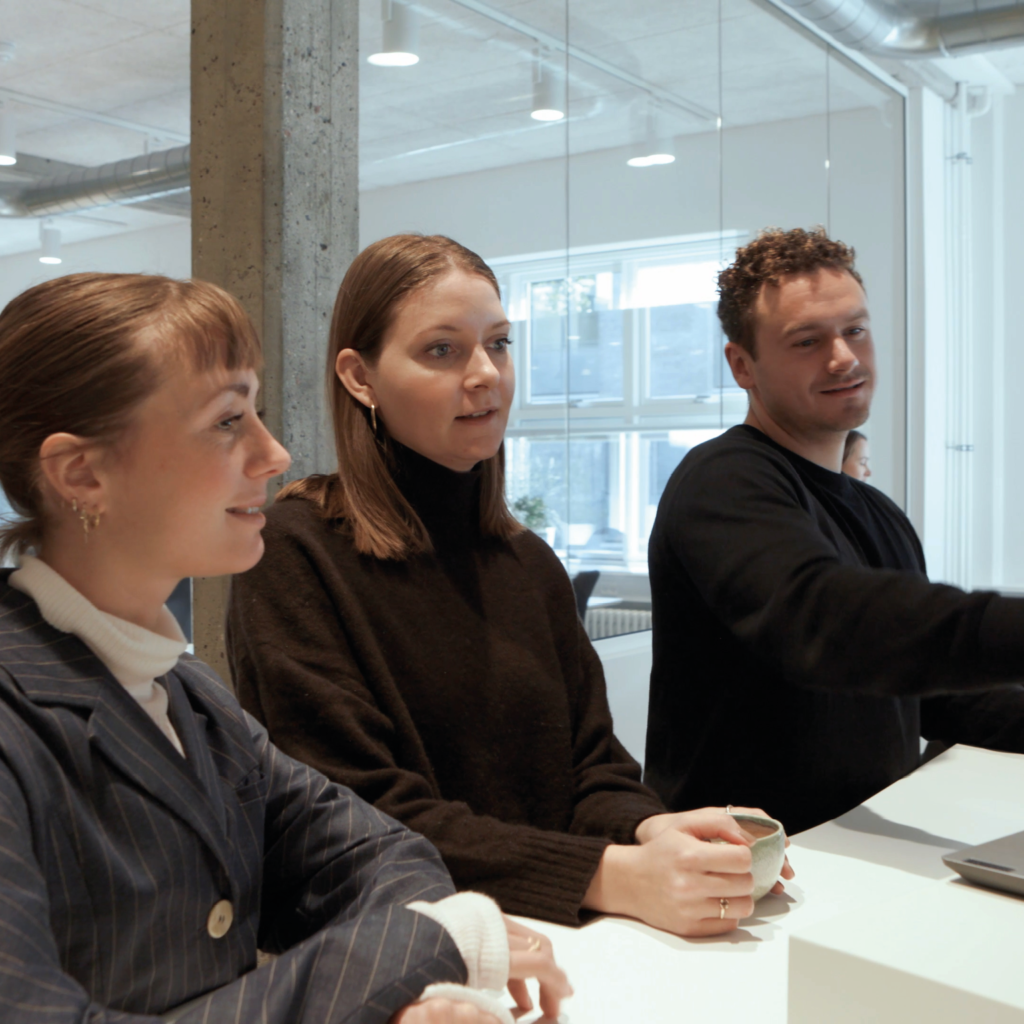
OFF ROAD delivered an AI upskilling programme for a group of participants at Renault Denmark. The participants were divided into five groups.
Rather than starting with the tools’ features, the learning was grounded in participants’ own work tasks. During workshops, they identified specific needs and explored where AI could help improve how those tasks were carried out.
Between sessions, participants could test the technology on real tasks and build on their experiences. Methods and lessons learned were shared, allowing relevant applications to develop from individual experiments into workflows that were easier to repeat.
The work also moved beyond general writing and search assistance. Participants found applications in areas including analysis, supporting professional assessments, planning and developing practical solutions.
Testing AI together and sharing knowledge gave participants a basis for discussing where AI was relevant and which principles should guide its use. AI could help improve the work, but professional judgement, quality assurance and the final decision were to remain with the employee.
RESULTS
More respondents used AI and could identify practical applications
The evaluation showed a shift in respondents’ self-reported use of AI and their sense of being able to apply the technology:
- The share of respondents who said they used AI increased from 73% to 94%.
- 94% could identify specific tasks where AI could be applied after the programme.
- 94% felt better equipped to use the technology.
- Participants began using AI for more than writing assistance, including analysis, planning and supporting professional assessments.
The results indicate a shift from inspiration towards more practical use at work.
The figures should be read as indicators of change among respondents, not as evidence of a statistically significant effect.
Can AI create real value for your business?
AI upskilling is not just about adopting new tools. We take the time to deeply understand your business and identify where AI has the potential to create real value. With a strong sense of ownership and a proactive approach, we help you prioritize, implement, and develop relevant AI initiatives, ensuring the technology is applied in a practical and responsible way. Let’s start a conversation about how we can work together, both strategically and operationally.